The Future of Digital Music Distribution: What's Changing in 2026 and What Comes Next
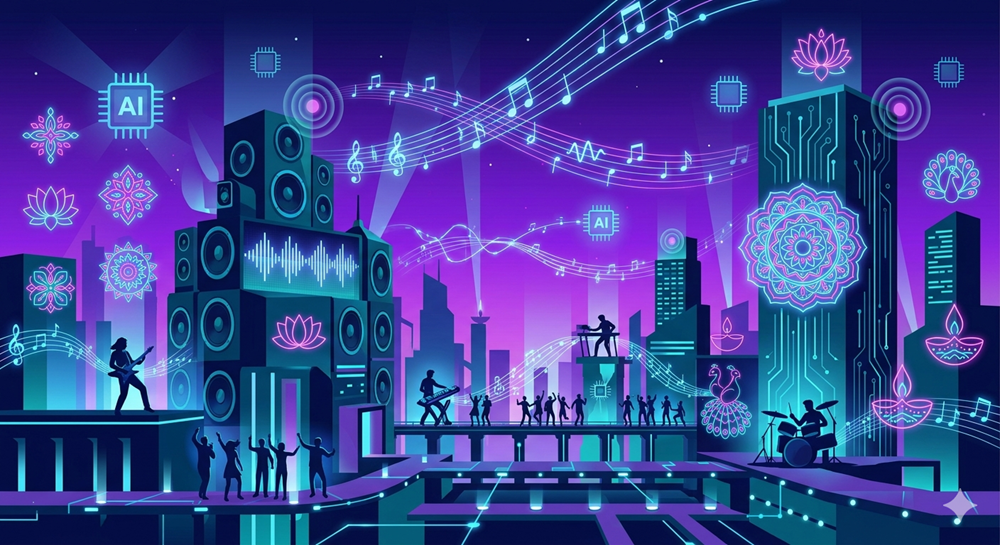
The future of digital music distribution in 2026 — AI tools, creator-owned ecosystems, direct artist-to-fan models, regional music growth India, and how independent artists should prepare.
The Future of Digital Music Distribution: What's Changing in 2026 and What Comes Next
Digital music distribution has changed the music industry more profoundly in the last decade than any development since the invention of recorded sound. And 2026 is not a pause in that change — it's an acceleration.
For independent artists in India, understanding where distribution is going is not just interesting — it's strategically critical. The artists who position themselves for what's coming will have real advantages over those who don't.
Trend 1 — AI Is Infrastructure Now, Not Headline
In 2025, AI was the headline. In 2026, it's becoming infrastructure. Artists no longer use AI tools for novelty — they're using them to improve workflows, speed up mixing decisions, assist with arrangement ideas, and enhance audio quality. The spotlight has returned to the artist, not the tool. Ethical use, transparency, and originality matter more than automation.
At the same time, DSPs are tightening AI content policies significantly. Spotify has removed over 75 million spam tracks and made protecting artist identity a top priority for 2026. The clear direction: AI-assisted music by genuine artists who disclose their use is fine; AI-generated spam designed to game royalty systems is being eliminated.
Trend 2 — Creator-Owned Ecosystems
The most significant structural shift in 2026 is the maturation of creator-owned music careers. Independent artists now control not just their music, but their identity, distribution, and growth. Sustainability has replaced virality as the goal. Artists are diversifying income through brand collaborations, sync licensing, commissioned audio work, live events, and direct fan support — reducing dependence on any single platform or income source.
This is the direction that makes sense for every independent artist in India building a long-term career, not just chasing a single streaming moment.
Trend 3 — Direct Artist-to-Fan Monetisation
The move toward direct artist-to-fan monetisation is accelerating. Spotify and Apple Music are both experimenting with tipping and direct fan support features. Platforms like Patreon and dedicated fan apps are growing. Independent artists who build owned audiences today are positioned to monetise them directly as these tools mature. A small, deeply engaged community is worth more financially than a large passive following.
Trend 4 — Short-Form Video Is the Permanent Discovery Channel
The data is unambiguous: Instagram Reels and YouTube Shorts are now the primary music discovery channels for listeners under 30 in India. This is not a trend — it's a structural reality of how Indian listeners find new music. Artists who treat short-form video as a core component of every release cycle, not an afterthought, are systematically outperforming those who don't.
Trend 5 — Regional Language Music Is India's Growth Engine
Bhojpuri, Tamil, Telugu, Bengali, Marathi, Kannada, and Punjabi music markets are all growing at rates that match or exceed Hindi in streaming. Independent artists releasing in regional languages are finding less competitive algorithmic discovery and more dedicated audiences. JioSaavn's 2025 data showed Bhojpuri and Marathi as among the fastest-growing regional markets on the platform. Language tagging accuracy is especially important here — incorrect language tags make regional music invisible to the audiences who would love it most.
What This Means for Indian Independent Artists
India is one of the fastest-growing music markets in the world. The independent artists who are professionally distributed, metadata-accurate, consistently releasing, active on short-form video, and building owned audiences are positioned to benefit disproportionately from this growth. The infrastructure is available. The question is who builds on it seriously.
Frequently Asked Questions
Will streaming royalty rates improve for independent artists in India?
Royalty rates are determined by DSP revenue and total stream volumes. As India's subscription base grows — projected to reach 5% of the population by 2026 — per-stream rates for Indian listeners are expected to improve. Building an international audience simultaneously is the most effective near-term strategy.
How is AI changing music distribution in 2026?
AI is being used by distributors and DSPs to detect spam tracks, enforce content policies, improve metadata validation, and personalise recommendations. For artists, the practical impact is stricter content compliance requirements — particularly around AI-generated content disclosure — and better algorithmic discovery for genuine creators.
→ Position your music career for the future of distribution. Shopolo Music — professional distribution, real-time analytics, transparent royalties, zero upfront cost. shopolomusic.com