How Music Royalties Work for Independent Artists: The Complete 2026 Guide
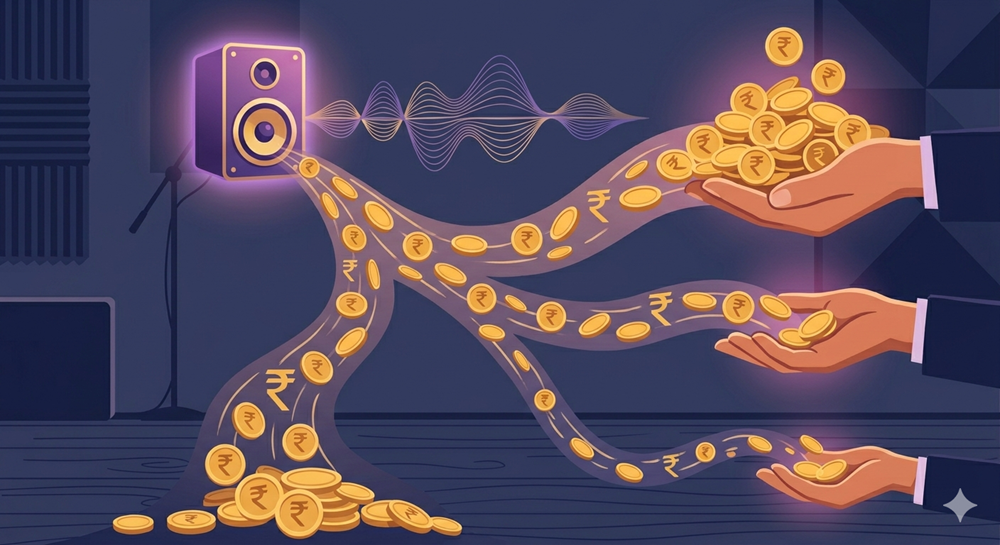
Everything independent artists in India need to know about music royalties in 2026 — types, how streaming royalties are calculated, what distributors collect, IPRS registration, and how to maximise your music income.
How Music Royalties Work for Independent Artists: The Complete 2026 Guide
Music royalties are the income your creative work generates — and understanding them properly is the difference between a music career that pays you what you've earned and one that quietly underpays you for years.
The royalty system looks complicated at first. Multiple types, multiple collection channels, multiple organisations. But once you see the complete picture, the fundamentals are straightforward. This guide breaks it down clearly for independent artists in India in 2026.
What Are Music Royalties?
A music royalty is a payment made to a rights-holder every time their copyrighted music is used in a qualifying way — streamed, downloaded, broadcast, performed publicly, or licensed. Royalties are the mechanism by which creators earn ongoing income from work they created once. The key fact: there are different types of royalties, collected through different channels. Missing even one type means leaving real money uncollected.
The Four Main Types of Music Royalties
1. Streaming Royalties (Master Rights)
Paid every time your recording is streamed on Spotify, Apple Music, JioSaavn, Amazon Music, YouTube Music, and other DSPs. These are paid to the master recording owner — typically you as the independent artist. Your digital music distribution service (Shopolo Music) collects these from all DSPs and pays your 70% share to your bank account.
2. Publishing Royalties (Composition Rights)
Paid to the songwriter and composer for use of the underlying musical composition — the melody and lyrics. Collected by Performing Rights Organisations (PROs). In India, IPRS (Indian Performing Right Society) collects these. Register with IPRS separately at iprs.org to receive them. Your distributor does not collect publishing royalties on your behalf.
3. Performance Royalties
Paid when music is publicly performed or broadcast — on radio, TV, in hotels, at live events, or on OTT platforms. Also collected by IPRS in India. Register with IPRS as a composer or lyricist to receive these. IPRS reported Rs. 700 crore in performance royalties in 2024–25, up 42% year-on-year — that's real money flowing to registered creators, and none of it reaches artists who haven't registered.
4. YouTube Content ID Royalties
Generated when your registered recordings are used in YouTube videos. YouTube places ads on matching videos and directs the advertising revenue to you automatically. Shopolo Music registers your recordings with YouTube Content ID so this happens without any manual action on your part.
Pro Tip: The biggest royalty mistake independent artists in India make is not registering with IPRS. Your publishing and performance royalties are being collected from radio stations, TV broadcasters, and OTT platforms every time your music plays — but without IPRS registration, you cannot receive them. This is money that's already been collected. It's sitting in what the industry calls the "black box" — unclaimed royalties waiting for registered creators.
How Streaming Royalties Are Calculated
Streaming royalties use a royalty pool model. Each DSP takes all subscription and advertising revenue for a given period and country, calculates a total royalty pool, then divides it proportionally by total streams. Your share: (your streams ÷ total platform streams) × total royalty pool = your gross royalty.
This is why per-stream rates vary by country. A stream from a Spotify Premium subscriber in Germany generates more revenue than a stream from a free-tier listener in India — not because the platforms value them differently, but because the revenue pools in those markets differ significantly. Realistic estimate for predominantly Indian streaming activity: approximately Rs. 0.10 to Rs. 0.25 per stream after distributor commission and taxes.
How Your Distributor Pays Royalties
- DSPs compile and report streaming data — typically monthly, 60–90 days after the streaming period ends.
- Shopolo Music audits the data, deducts DSP platform commissions, applicable TDS, and GST.
- Your 70% share of net revenue is calculated.
- Royalty reports are published in your Ground1860 dashboard monthly or quarterly.
- When your balance meets the minimum payout threshold of INR 1,000, payment is processed to your verified Indian bank account.
How to Maximise Your Royalty Income
- Register with IPRS immediately if you write your own music — activate your publishing and performance royalty collection. Don't let your compositions sit in the black box.
- Distribute through Shopolo Music to ensure all master royalties and YouTube Content ID earnings are captured.
- Build an international audience — streams from US, UK, and EU markets earn 3–5x more per stream than Indian streams. Growing your Spotify listeners outside India is one of the highest-leverage actions you can take.
- Release consistently — a larger catalogue generates more cumulative streaming income. Ten tracks earning modestly each add up significantly over time.
- Tag your language and genre accurately — correct metadata puts your music in front of language-specific and genre-specific playlists where your core audience is listening.
Frequently Asked Questions
How much does Spotify pay per stream in India?
Spotify does not publish a fixed per-stream rate — it varies by listener tier and country. For predominantly Indian listeners, a realistic estimate is Rs. 0.10 to Rs. 0.25 per stream before distributor commission and taxes. International streams earn significantly more.
How long does it take to receive royalties from streaming?
DSPs report earnings 60–90 days after the streaming period. Royalties then appear in your Ground1860 dashboard and are paid when your balance meets the INR 1,000 minimum threshold. Total time from stream to bank account: typically 3–4 months.
Does Shopolo Music collect IPRS royalties on my behalf?
No. Shopolo Music collects master recording royalties from DSP streaming and YouTube Content ID. Publishing royalties and performance royalties collected by IPRS are separate and require your own direct registration with IPRS at iprs.org. Both income streams are yours — they just flow through different channels.
What are black box royalties and do Indian artists miss out on them? Black box royalties are unclaimed royalties collected by PROs but not distributed because the rights-holder hasn't registered or cannot be identified. Artists who haven't registered with IPRS are missing their share of this pool. Register at iprs.org immediately if you write your own music.
→ Shopolo Music collects your streaming royalties from every DSP globally, registers your music with YouTube Content ID, and pays you 70% of net collected revenue transparently. Start at shopolomusic.com